Photos are the first thing car buyers look at in an ad: 93% of car buyers on FINN say so.
Buyers want those photos to look good, but they distrust any picture that hides the actual car.
That tension sits behind most dealer objections about listing photos.
"Edited photos look fake."
"If I show the scratch, nobody will call."
"A phone photo on the lot is good enough."
Each one sounds reasonable, and each one is about half right.
Buyers are not choosing between polish and honesty. They click on clean, consistent photos, and then they check them. Is this the actual car? Is the mileage real? Is it worth the drive?
Photos that pass both tests earn the call, and the rule behind them fits on one line: professional backgrounds, the real car, every time.
1. The short version
2. Objection 1: "Buyers only look at price and mileage"
3. Objection 2: "Edited photos look fake"
4. Objection 3: "If I show the damage, nobody will call"
5. Objection 4: "Buyers come in to see the car anyway"
6. Objection 5: "A phone photo on the lot is good enough"
7. What buyers check in car listing photos, shot by shot
8. Where Autopix fits
9. Frequently asked questions
Price and mileage matter. Nobody disputes that.
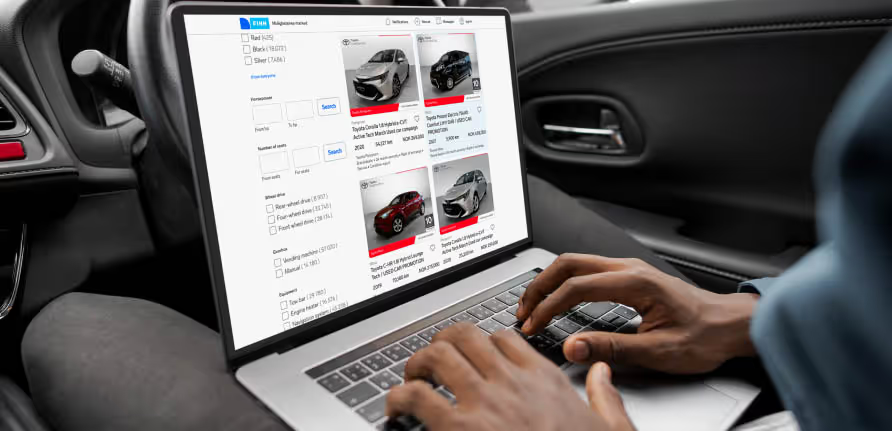
But on Norway's largest car marketplace, buyers say they start somewhere else: when FINN asked car buyers about their habits, 93% said the photos are the first thing they look at in an ad.
FINN's advice to dealers follows from that: put the best photo first, and check how it looks on a phone, because that is where most people see the listing.
Mileage is also, in a way, a photo.
In Cox Automotive's Power of Pictures study, used car buyers ranked a photo of the odometer as the most important image in a listing. New car buyers put the dashboard first. The study is American and dates from 2016, with data added in 2018, so read the ranking as a direction rather than a Nordic fact.
The logic travels well, though. A mileage figure typed into a field is a claim. A sharp shot of the instrument cluster is evidence.
What to do: keep price and mileage accurate, then let the gallery back them up. Lead with a clean front three-quarter shot and put the odometer in the first third of the gallery, not at the end.
This objection has the most truth in it, so it deserves a straight answer.
Buyers are wary of photos that look too good. CarGurus warns private sellers that over-produced photos can make buyers think they are looking at stock images rather than the car for sale.
A Swedish guide to buying on Blocket lists professional-looking photos among its warning signs, because scammers reuse images from other ads.
Read those warnings closely, though.
The suspicion is about whether the photos show this particular car. Another Swedish buyer's guide tells readers exactly how to check: make sure the same car appears in every photo, and treat different wheels, number plates, colour tones or interiors as a sign the images came from different places.
That draws a clear line between editing that builds trust and editing that destroys it.
When photos are professional and honest at once, buyers respond to them. In a survey of 372 online car shoppers by Redline, a vehicle photo company, 94% said they click on professional-looking photos first.
It is a vendor survey, so weigh it accordingly, but it points the same way as the buyer guides: clean photos win the click, and consistency keeps the trust.
That’s the whole distinction in one line: professional backgrounds, the real car, every time. It is the line Autopix works to.
The background is replaced; the car is not touched. Autopix does not retouch or remove anything from the body of the vehicle, so the car in the photo is the car on the forecourt.
You can see before-and-after examples on the Autopix automotive page.
Some buyers will not call. Those are the buyers who would have walked away at the viewing, after an hour of a salesperson's time.
FINN's photo advice for car ads is blunt: be honest, and if the car has dents or other damage, show it in the photos.
It also names the areas photos must show clearly: the bonnet, the corners, the loading edge and the sides. CarGurus adds a practical touch for scratches and dents: a ruler in the frame for scale.
Buyers are being told to look for exactly this. The same Swedish buyer's guide lists visible damage among the photos a listing should have, and advises buyers to ask for photos of tyres and any damage before they travel.
It also notes that a seller who refuses to send one simple extra photo makes a far worse impression than a listing with few photos to begin with.
Picture the alternative… A buyer drives two hours, finds a scraped rear bumper that was not in the photos, and starts the conversation suspicious. Either the price drops or the buyer leaves. A photographed scratch is already part of the price. A scratch discovered at the viewing becomes a negotiating tool.
Editing that removes the scratch from the photo has not removed it from the car; it has only moved the argument to the forecourt.
What to do: photograph every known mark twice, once close up and once from far enough back to show where it sits on the car. Put those shots in the same place in every gallery so buyers know where to find them.
Most do. FINN's own photo guide points out that few people buy a car without seeing it properly first.
So the job of a listing photo is not to close the sale.
It’ss to win the visit, the call, or the message ahead of every similar car listed nearby.
FINN also describes how buyers decide who gets that visit. Most want as complete an impression of the car as possible from the ad, and then contact the seller to have that impression confirmed. When an ad falls short, they move on to the next one.
Some buyers go further than that. In the Cox Automotive study, 40% of US consumers said they were likely to buy a vehicle based on images they viewed online, without seeing it in person. Nordic habits may differ. The direction is still plain: the buyer who arrives at your forecourt has usually made up most of their mind before leaving the sofa.
What to do: treat the gallery as the first viewing. If a salesperson would point something out on the forecourt, such as new tyres, a full service book or a clean rear bench, it belongs in the photos.
The phone is not the problem. Every example photo in FINN's guide to good car photos was taken on a mobile phone and left unedited.
What the phone cannot fix on its own is everything around the car.
FINN's guidance names the usual culprits:
Notice the overlap with objection 2. A background that changes from car to car, or light that turns a silver car blue, is exactly what makes a buyer wonder whether the photos match the car.
What to do: keep shooting on the phone, use the same angles on every car, and fix the background and the light afterwards instead of waiting for an empty forecourt and good weather. For how background replacement copes with difficult cars, see what to test in a car background remover. For the shots buyers check inside the car, see car interior photography tips for dealers.
Put the buyer guides, FINN's advice, and the Cox ranking side by side, and the same checklist appears. Each photo in a good gallery answers one question a buyer is asking.
How many of these belong in the listing, and in what order, is a separate question.
The dealer's 21-shot checklist covers it.
Every objection above comes back to the same standard: professional backgrounds, the real car, every time.
Autopix is built to hold that standard on phone photos taken on a busy forecourt.
A demo image proves very little. Your own worst case proves a lot.
Pick a car photographed on a busy day: other cars behind it, a price board or a person in the frame, and at least one visible mark, such as a stone chip or a scuffed bumper.
Send that car through Autopix, then put the result next to your current listing photos of the same car and check three things:
1. The background. Is it clean, and the same across every angle?
2. The car. Are the paint colour, wheels, and number plates the ones on your forecourt?
3. The mark. Is the chip or scuff still there, in the same place, at the same size?
If all three pass, the photos meet the standard buyers check for. If the mark has gone, the photos would not survive the viewing.
Read together, the five objections ask one question: can a listing look professional and still be trusted?
Buyers answer yes, as long as the car in the photos is the car on the forecourt.
If your listings look different from car to car, or your galleries stop at the steering wheel, start there. See how Autopix handles dealer photos.